


Sensors — Flow
Flow Measurement Starts with Choosing the Right Sensor.
Not all flow sensors are created equal — and the wrong choice can mean inaccurate data, missed leaks, or unnecessary installation costs. BluSENSE supports multiple flow measurement technologies, each suited to different applications, budgets, and installation constraints.
Here's what you need to know before you buy.
Talk to an Expert
Flow Sensor Types
Four Technologies. One Right Answer for Your Application.
Each flow measurement technology has distinct advantages — and trade-offs. Understanding them before you buy ensures your data is accurate, your installation is practical, and your monitoring delivers what your project needs.
Ultrasonic Flow Meters
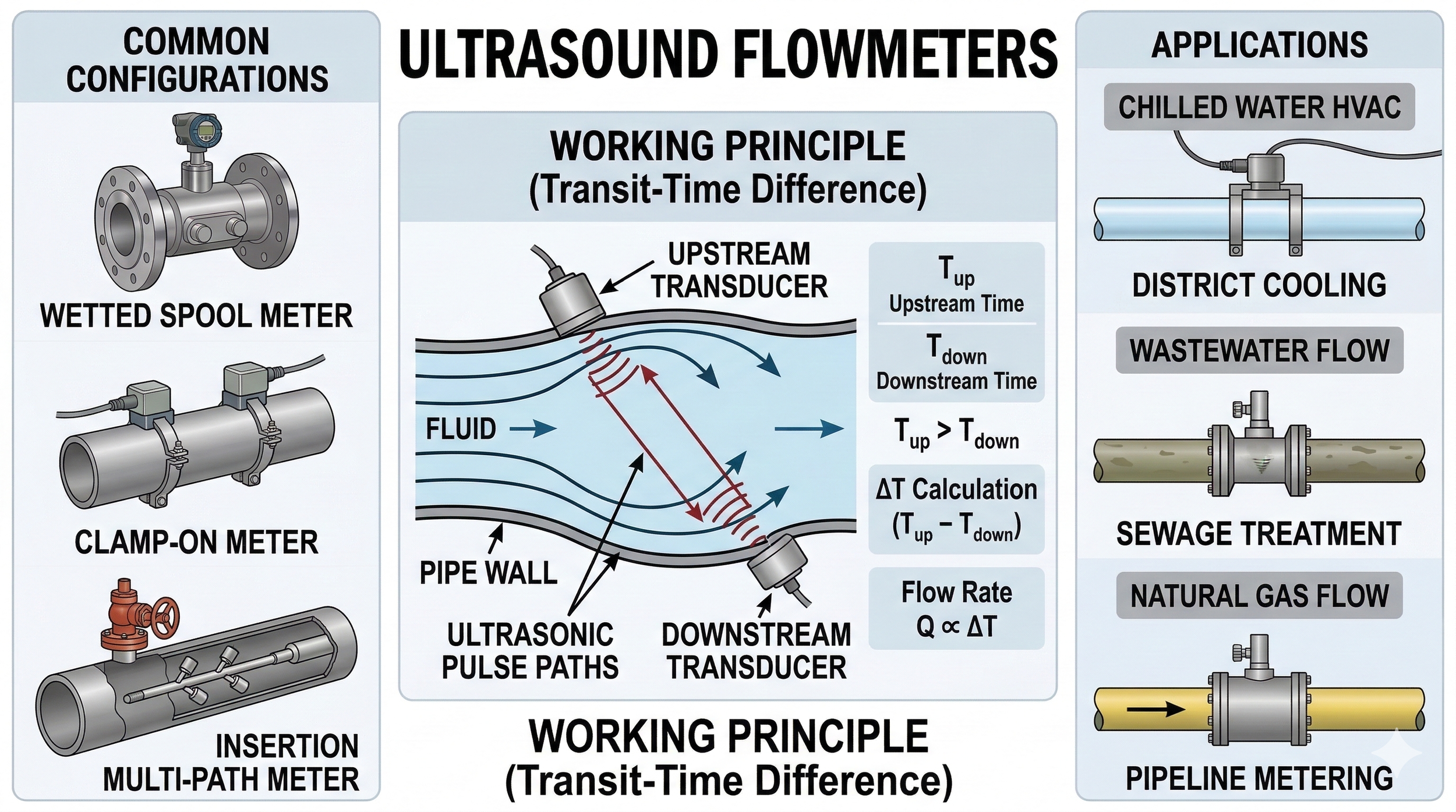
The biggest advantage of ultrasonic flow meters is that they clamp directly onto the outside of the pipe — no cutting, no shutdowns, no disruption to the plumbing system. That makes them an attractive choice when opening up the plumbing is either impractical or undesirable. The trade-off is cost — ultrasonic sensors are among the more expensive flow measurement options. They also have a low-flow limitation: most cannot reliably detect flow below 0.05 gallons per minute, making them a poor fit for leak detection. Output is typically 4-20mA, voltage signal, Modbus, or serial — all compatible with BluNODE CL and BluCORE.
Pulse Flow Meters
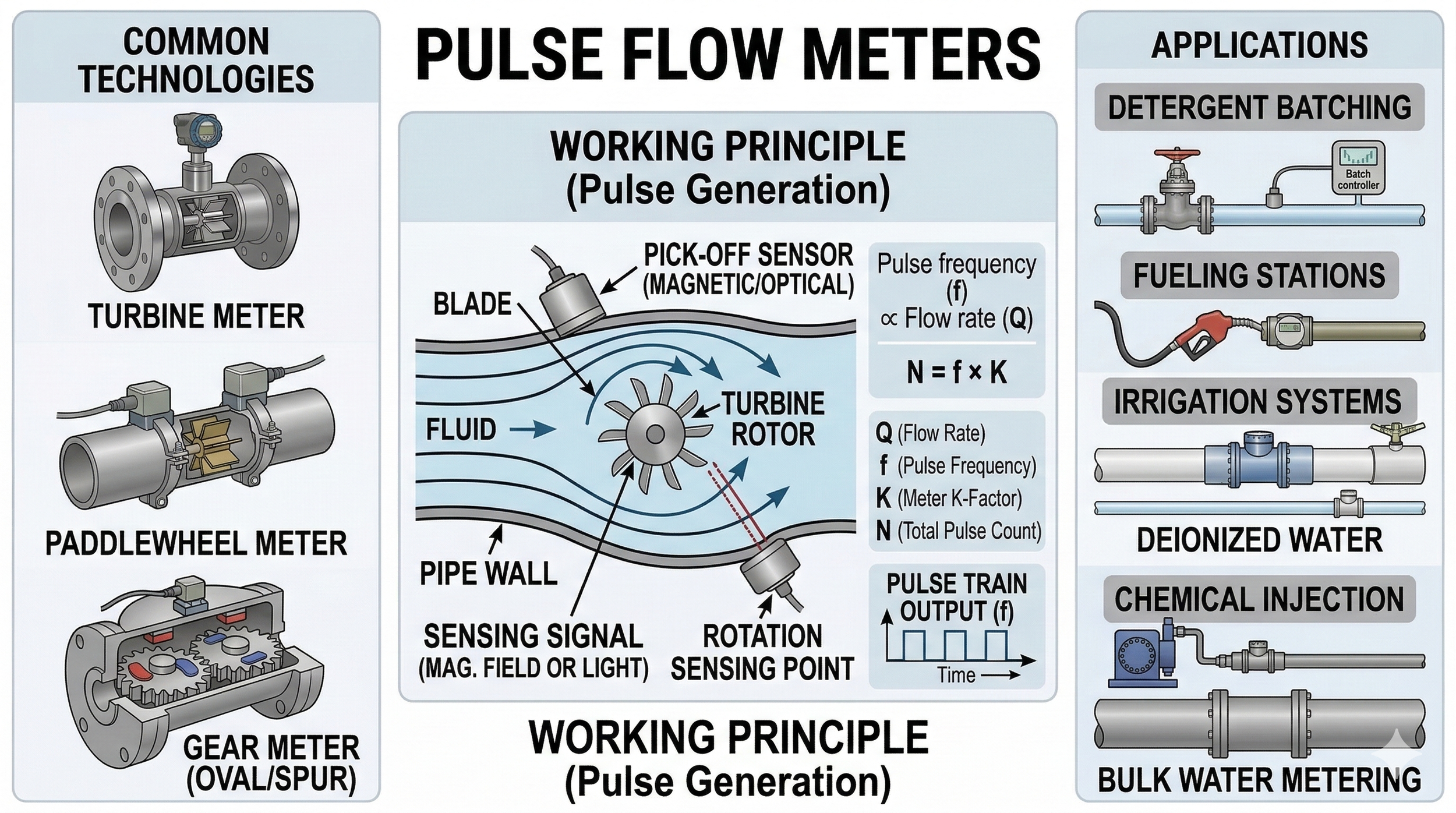
Pulse flow meters are in-line devices — the plumbing must be opened for installation. In many applications this is straightforward: water heaters, for example, are typically connected via flexible connectors that make installing a small pulse flow meter quick and easy. Pulse sensors can also be attached to read pulses directly from existing utility meters at the property line — no new hardware in the line at all. Pulse flow meters offer considerable accuracy at a low price point, making them one of the most cost-effective long-term monitoring solutions available. BluPULSE is purpose-built for pulse flow meters — with two dedicated pulse inputs, battery operation, and no wiring required at the meter.
Vortex Flow Meters
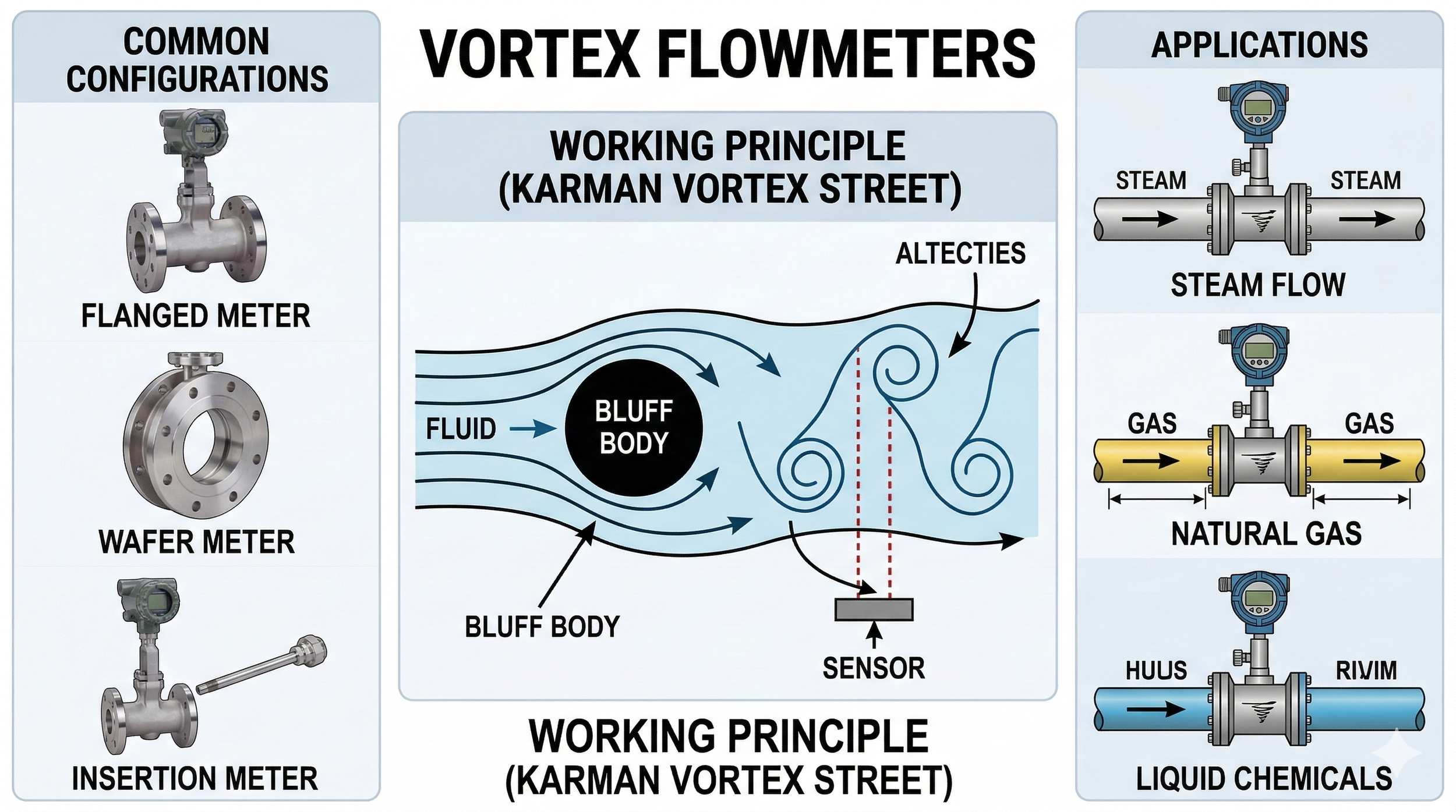
Vortex flow meters are in-line devices — like pulse meters, the plumbing must be opened for installation. They are less expensive than ultrasonic sensors, making them a practical middle-ground option when clamp-on installation isn't required. One important limitation: vortex flow meters cannot reliably read flows below 1 liter per minute (approximately ¼ gallon per minute), making them unsuitable for leak detection. Their key advantage over other in-line options is that they simultaneously measure pressure and temperature alongside flow — three measurements in one device, with no additional sensors required. Output is typically 4-20mA, voltage signal, Modbus, or serial communication.
Magnetic Flow Meters
Magnetic flow meters work by measuring the voltage generated when a conductive liquid passes through a magnetic field. Because there are no moving parts inside the pipe, they are exceptionally well-suited for water or liquids that carry contaminants, suspended solids, or other particulates that would damage or clog mechanical sensors. Like pulse and vortex meters, magnetic flow meters are in-line devices requiring the plumbing to be opened. Pricing sits in the mid-range and varies with accuracy requirements, but their unique characteristics make them the right choice — and often the only choice — when fluid quality is a factor. Output is typically 4-20mA, voltage signal, Modbus, or serial communication.
Flow Sensor Selection
Not Sure Which Flow Sensor Is Right for Your Application?
Our support plans include expert guidance to match the right sensor to your specific system — covering flow range, installation constraints, accuracy requirements, and BluSENSE compatibility.
The right sensor choice is the difference between accurate data and expensive guesswork.