

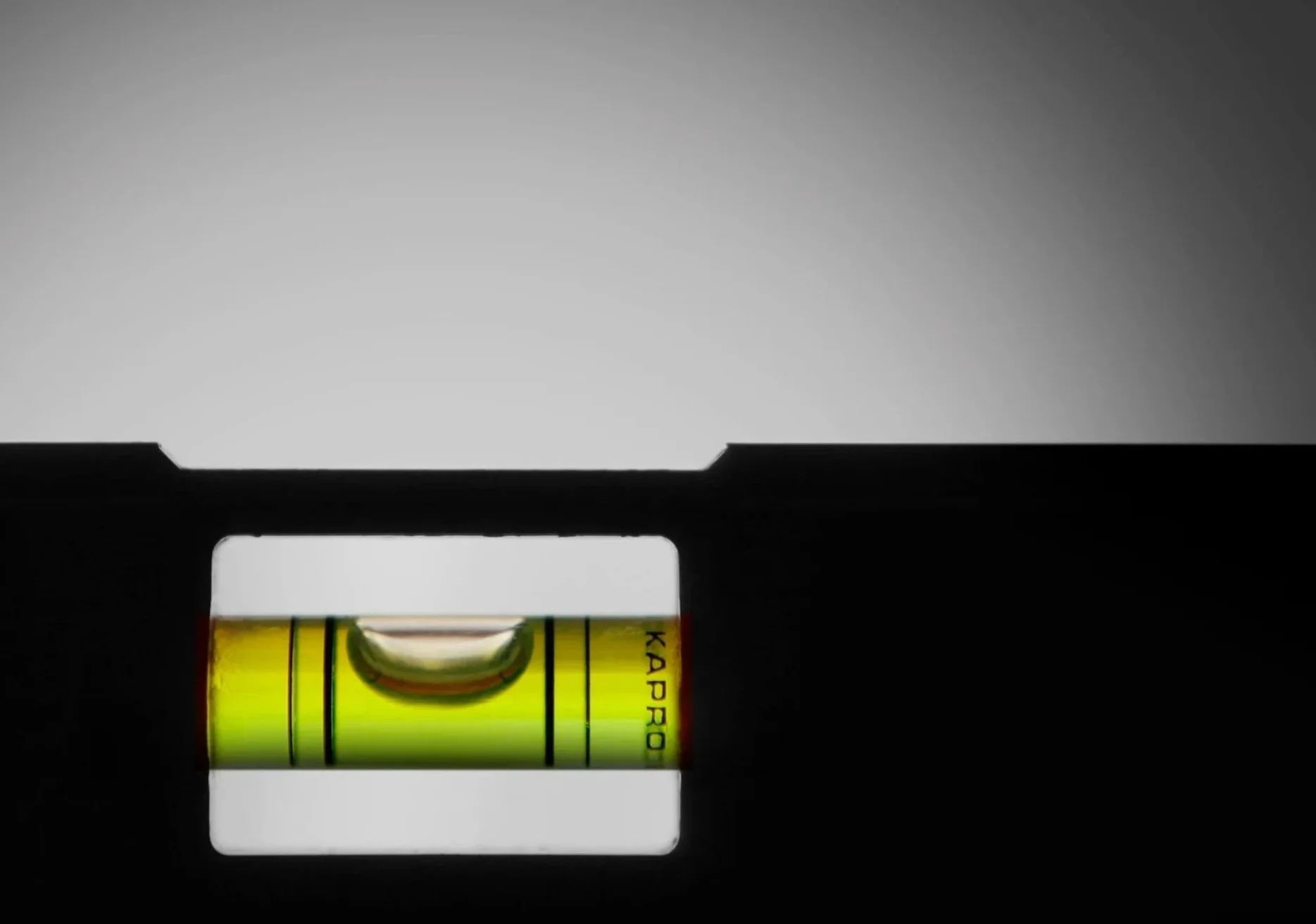
Sensors — Level
Know What's in the Tank — Before It Becomes a Problem.
Level monitoring is critical wherever liquid storage, overflow risk, or leak detection is part of your building or process system. The right level sensor depends on your tank or enclosure type, the liquid media involved, your need for continuous measurement versus a threshold trigger, and how much maintenance access you have.
Here's how the main technologies compare.
Talk to an Expert
Level Sensor Types
Four Technologies. The Right One Depends on Your Application.
Tank geometry, liquid media, and whether you need continuous measurement or threshold triggering all determine which level sensor is right for your project. Here's how to choose.
Float Level Sensors
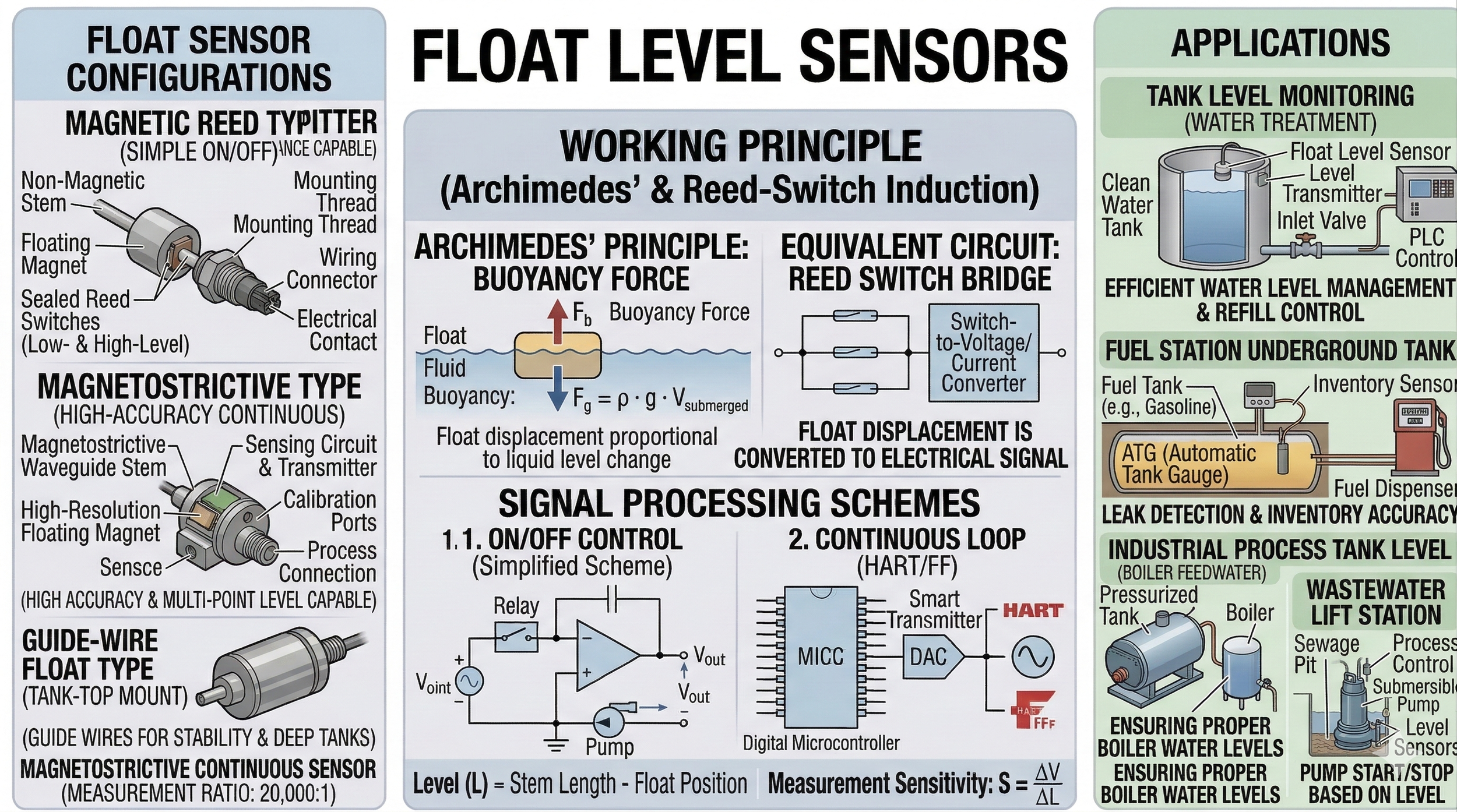
Float level sensors are one of the simplest and most inexpensive level sensing solutions available. A float attached to a switch rises and falls with the liquid level — triggering a signal when a set mechanical level is reached. They can also be deployed in arrays to capture multiple level thresholds within the same tank or enclosure. The main vulnerability is debris. If particulates or contaminants in the liquid get caught in the float mechanism, the sensor can fail to trigger or become disabled entirely. Careful attention to the liquid media — its cleanliness, viscosity, and chemical compatibility with the float materials — is important when specifying this sensor type. Output is a switch or voltage signal that triggers when the set level is reached.
Magnetic Level Sensors
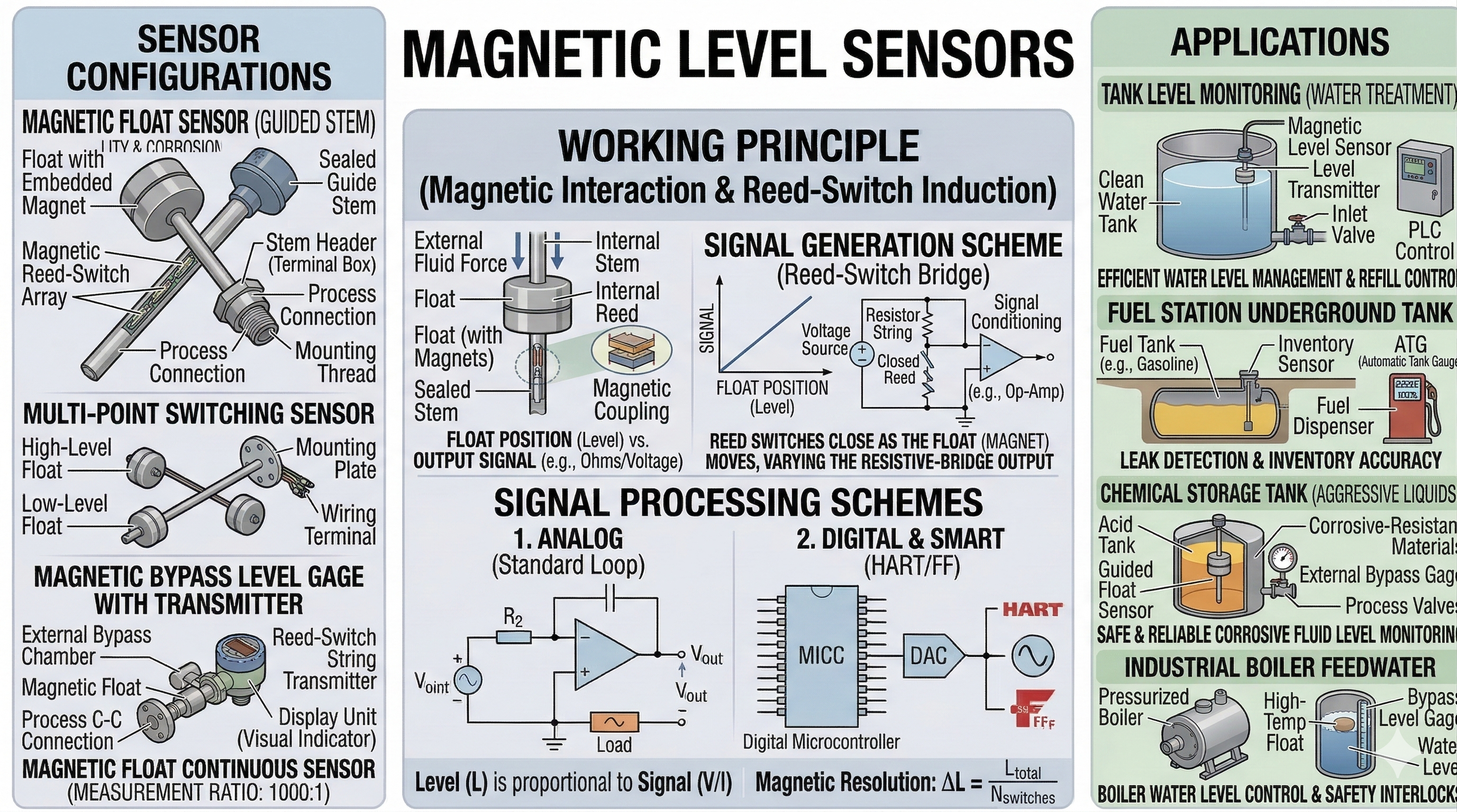
Magnetic level sensors also use a float but eliminate the electrical wiring connection to the float itself — reducing the risk of tangling and making the sensor far less susceptible to debris interference. Instead, a magnetic sensor is mounted on the outside of the tank and detects the position of the float magnetically through the tank wall, making it easier to service without draining or opening the tank. Output is a switch or voltage signal that triggers when the set mechanical level is reached — the same threshold-based approach as a float sensor, but with improved reliability and easier maintenance access.
Capacitive Level Sensors
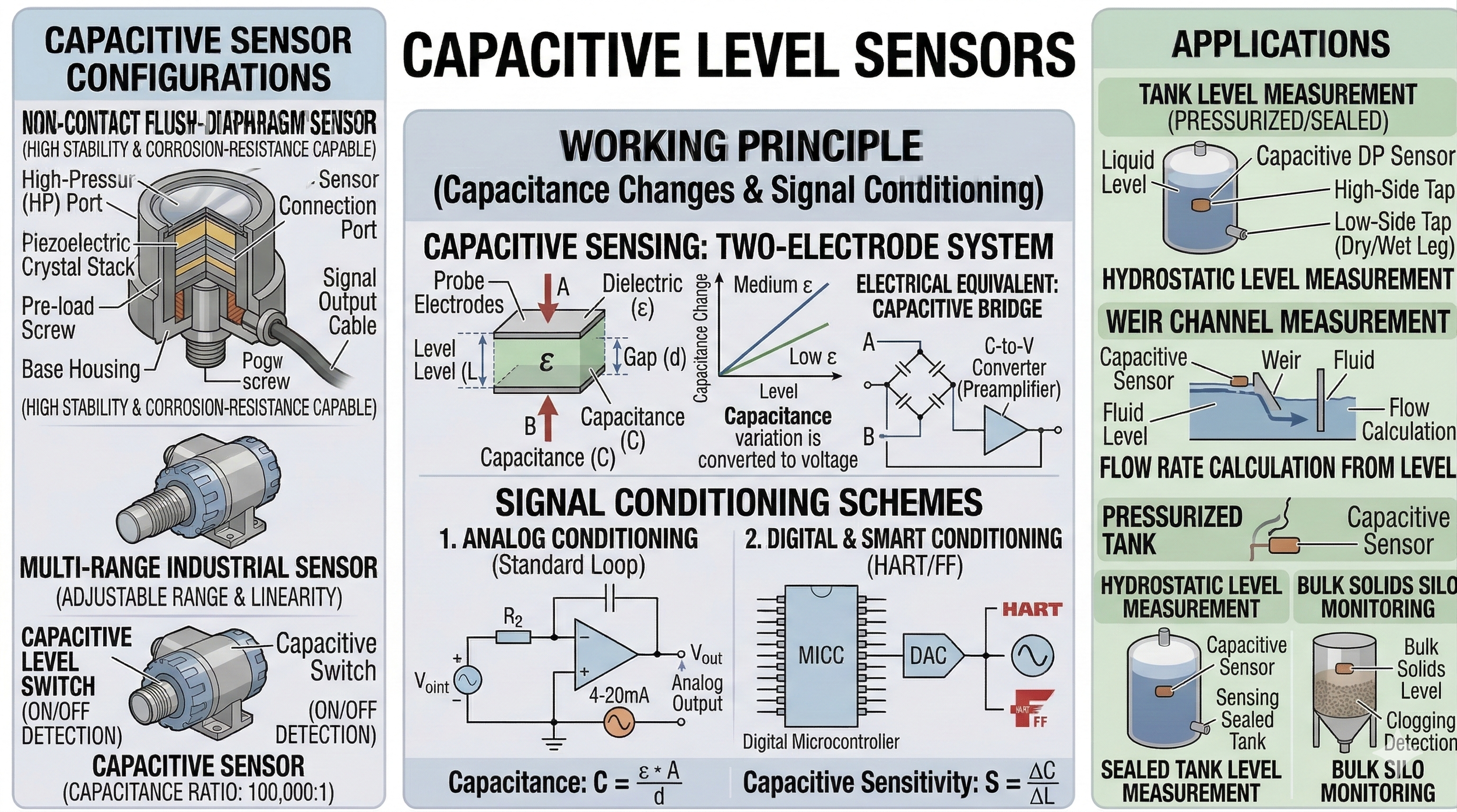
Capacitive level sensors detect the presence of liquid by allowing a small electrical current to flow across two electrodes when a conductive liquid covers them. There are no moving parts — the sensor either conducts or it doesn't, depending on whether the liquid is present at the electrode level. This makes capacitive sensors ideal for leak detection. A sensor placed at floor level or at the base of equipment will trigger immediately when liquid is present — providing an early warning before a leak becomes a flood. Output is a switch or voltage signal that triggers when the sensor is submerged.
Ultrasonic Level Sensors
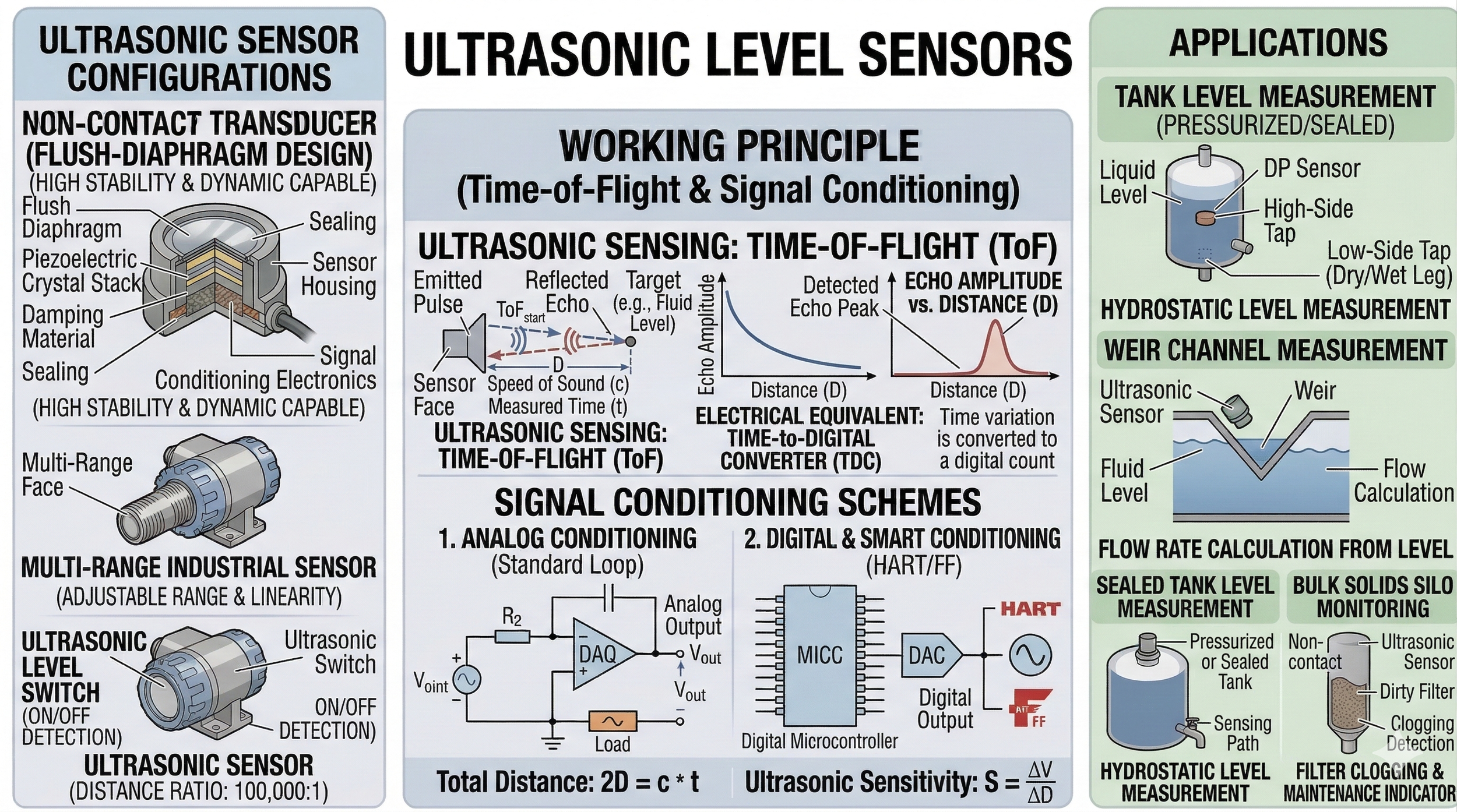
Ultrasonic level sensors are our go-to recommendation for most level monitoring applications. The sensor mounts above the liquid surface and periodically emits an ultrasonic pulse downward. When the pulse hits the liquid surface it reflects back, and a Time of Flight (ToF) circuit measures how long the return trip takes. Subtracting that distance from the known depth of the tank gives you a continuous, accurate level reading. Because the sensor never contacts the liquid, debris is not an issue. Maintenance and calibration are simple. Accuracy is excellent, reliability is high, and the price point is reasonable. Unless your application has specific requirements that point to another technology, the ultrasonic level sensor is the right choice. Output is typically 4-20mA or serial communication, compatible with BluNODE CL and BluCORE.
Level Sensor Selection
Not Sure Which Level Sensor Is Right for Your Application?
Tank geometry, liquid media, and whether you need continuous measurement or threshold triggering all affect sensor selection. Our support plans include expert guidance to match the right sensor to your specific system and ensure full BluSENSE compatibility.
The right level sensor keeps you informed before a problem becomes a crisis.