

Sensors — Pressure
Pressure Monitoring That Goes Where the Data Is.
Pressure measurement is fundamental to understanding how plumbing and HVAC systems are actually performing — but it requires direct contact with the fluid being measured. Choosing the right sensor means matching the technology to your pressure range, installation access, and whether you need absolute or differential measurement.
Here's what you need to know before you specify.
Talk to an Expert
Pressure Sensor Types
Two Technologies. The Right One Depends on What You're Measuring.
Pressure range, installation access, and whether you need absolute or differential measurement all determine which sensor is right for your application. Here's how to choose.
Piezoelectric Pressure Sensors & Transmitters
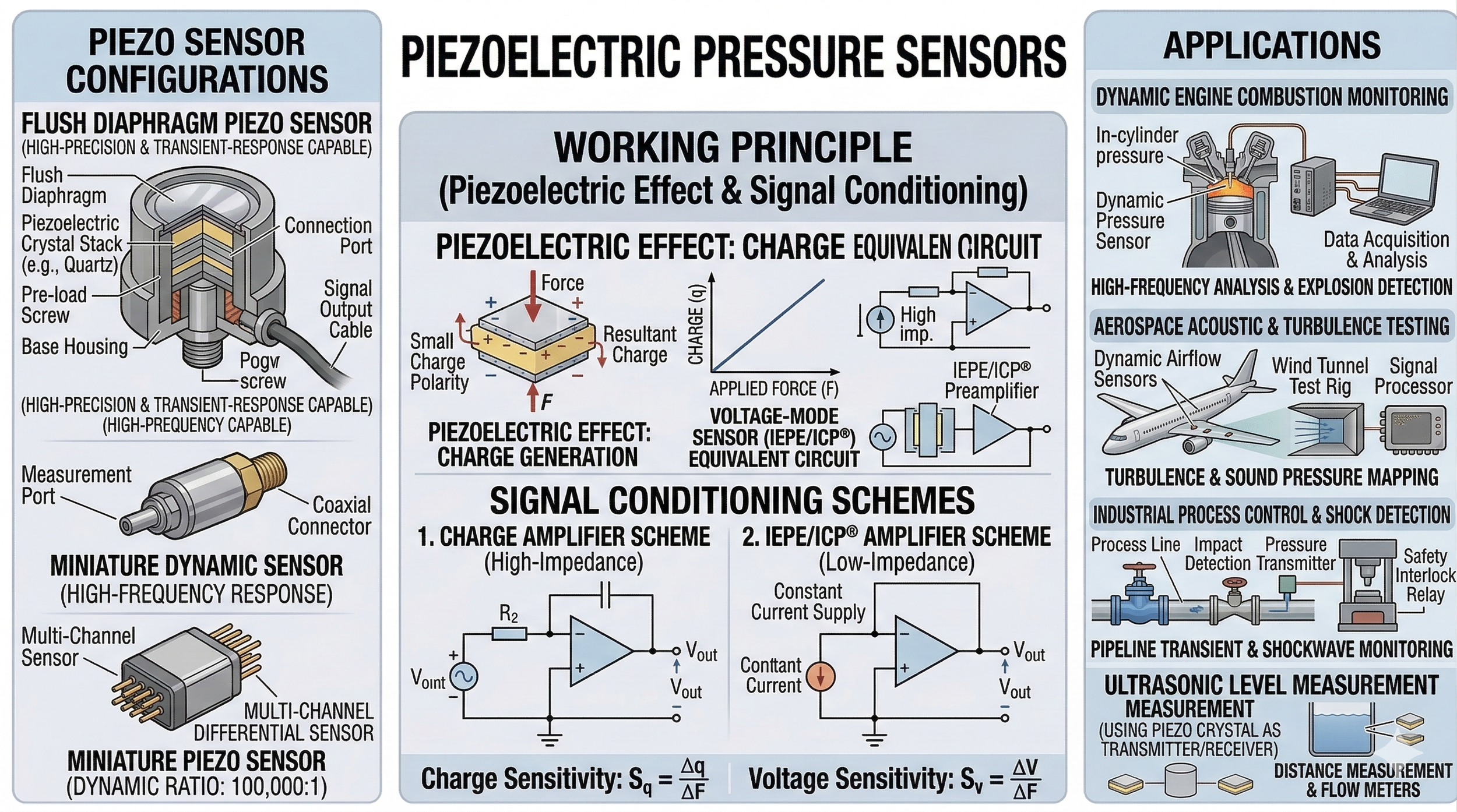
The vast majority of pressure sensors on the market use a piezoelectric crystal to measure pressure — and for good reason. They are reliable, well-proven, and available across a wide range of pressure ratings to suit almost any application. Optical and capacitive pressure sensors also exist but are far less common in building and plumbing system applications. All pressure sensors require direct contact with the fluid being measured. That means the plumbing system must be opened up, or a tee fitting installed at an endpoint of the branch or line being monitored. Pressure sensors are rated by range — selecting the right range for your application is important, as a sensor specified for too high a range will sacrifice accuracy at lower pressures. Output is typically 4-20mA, voltage signal, or serial communication, all compatible with BluNODE CL and BluCORE.
Differential Pressure Sensors & Transmitters
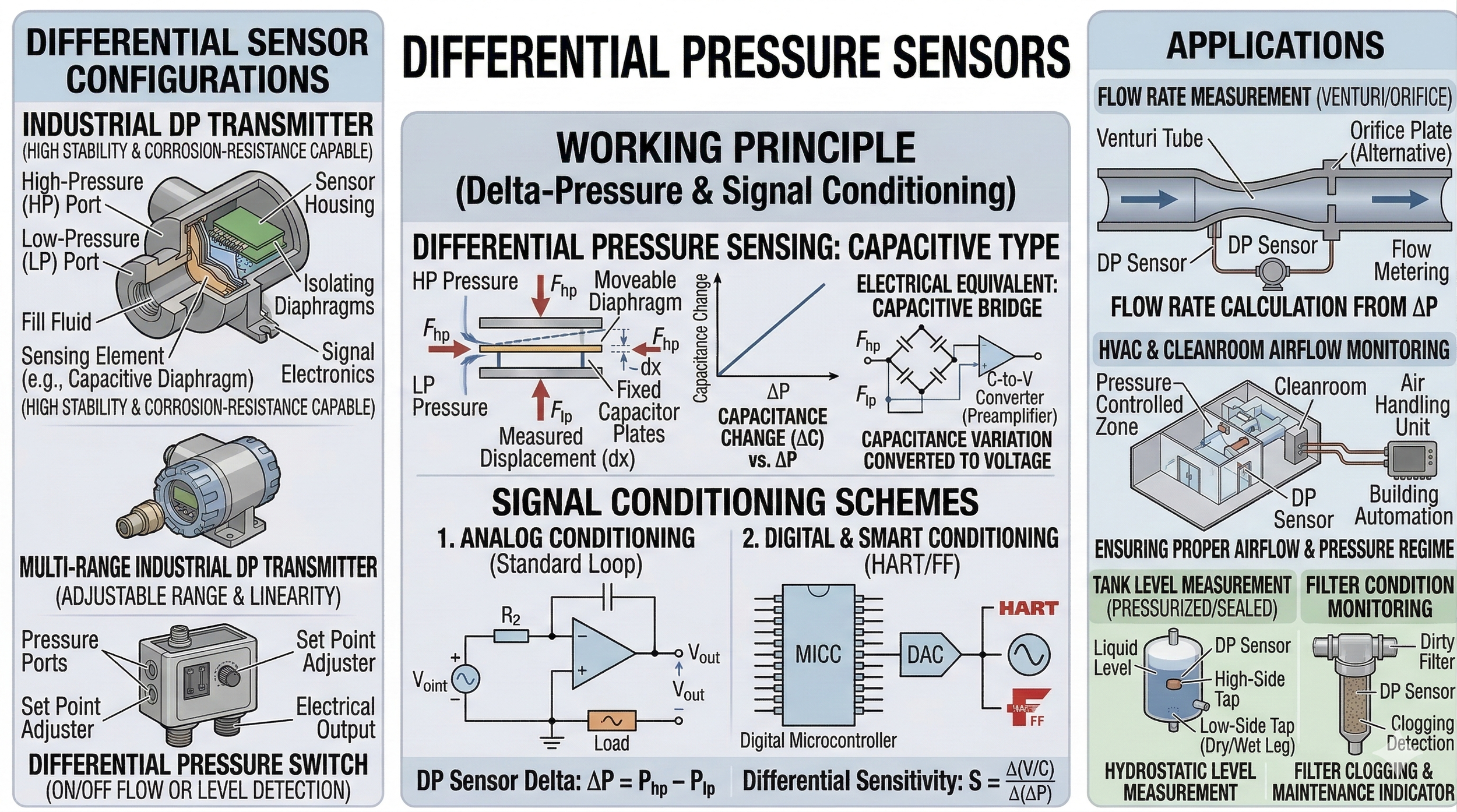
Differential pressure sensors use the same underlying piezoelectric technology but are specifically designed to measure the pressure difference between two points in a system — rather than absolute pressure at a single point. Most differential pressure sensors connect two measurement points via a connecting tube or pipe, and some designs incorporate both measurement elements in a single housing. This makes them particularly well-suited for HVAC applications — measuring pressure drops across filters, coils, or dampers — and for monitoring pressure differentials in plumbing systems where the difference between two points carries more diagnostic value than either reading alone. A differential pressure sensor is not simply two individual pressure sensors placed separately; the arrangement and connection between the two measurement points is integral to how the device works. Output is typically 4-20mA, voltage signal, or serial communication. For high-range differential pressure applications (50 kPa to 5 MPa), client-supplied sensors connect to BluNODE CL via their 4-20mA output. For low-range HVAC differential pressure and mass flow monitoring, BluNODE MF — with four onboard Sensirion SDP810 mass flow sensors — is coming soon.
Pressure Sensor Selection
Not Sure Which Pressure Sensor Is Right for Your Application?
Pressure range, installation access, and whether you need absolute or differential measurement all affect sensor selection. Our support plans include expert guidance to match the right sensor to your specific system and ensure full BluSENSE compatibility.
The right sensor specification prevents costly rework — and ensures your data is actually measuring what matters.